Distance and Busbar Protection Training part 1&2
About Course
Part 1: Distance Protection
• Introduction to distance protection (21)
• Impedance measurement principle (Z = V/I)
Protection zones:
• Zone 1 (instantaneous, ~80–90% line)
• Zone 2 (time-delayed backup)
• Zone 3 (remote backup)
Training session part 1
Characteristics:
• Mho relay
• Reactance relay
• Impedance relay
• Effect of fault resistance and load encroachment • Power swing blocking and out-of-step protection
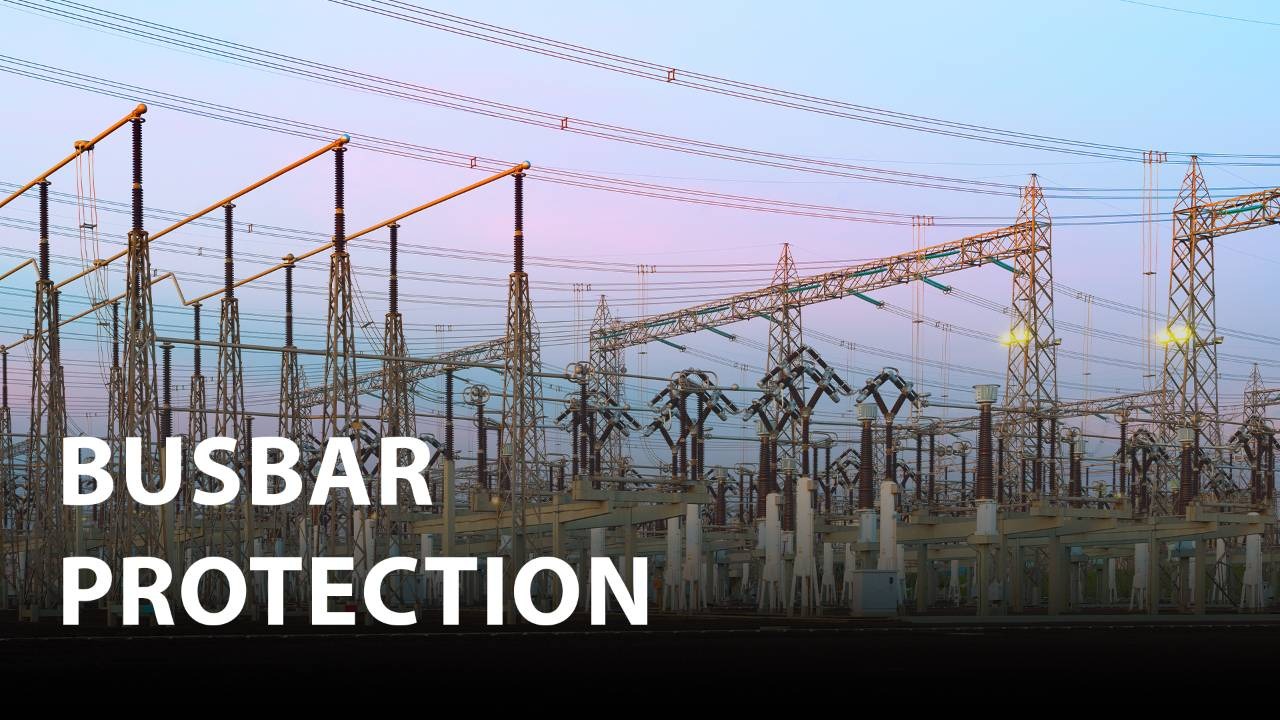
Part 2: Busbar Protection
• High Impedance Busbar Protection
• Principle: Voltage-based differential protection
• Uses stabilizing resistor + METROSIL CALCULATIONS
• Requires matched CT ratios and characteristics
Training session part 2
Limitations:
• Sensitive to CT mismatch
• Less flexible for complex bus schemes
• Low Impedance Busbar Protection
• Principle: Current differential (Kirchhoff’s law)
• Uses numerical relays with bias (Id vs Ib)
Key features:
• No need for identical CTs
• Suitable for complex busbar configurations
• Faster operation and advanced logic
Additional features:
• Zone selection logic
• CT supervision
• Check zone protection
Course Content
Distance and Busbar Protection
-
Distance and Busbar Protection
Student Ratings & Reviews